Search This Blog

Showing posts with label World Heritage Site. Show all posts

Wednesday, July 20, 2011

Visit San Agustin Church in Manila

San Agustin Church in Intramuros, Manila was designated as World Heritage Site by UNESCO under classification of "Baroque Churches of the Philippines" together with Nuestra Senora dela Asuncion in Sta. Maria, Ilocos Sur, San Agustin Church in Paoay, Ilocos Norte, and Sto. Tomas de Villanueva Church in Miag-ao, Iloilo. In 1976, it was named as National Historical Landmark by the Philippine Government.

San Agustin Church was the oldest church in the Philippines, construction started in 1586 and completely finished in 1607. The structure was built using adobe stones quarried from Meycauayan, Binangonan and San Mateo. It has an elliptical foundation that keep it strong during earthquakes. San Agustin Church design was derived from churches built by Augustinians in Mexico. The facade is very simple but inside the church has notable baroque architecture. The interior is in the form of Latin cross with ceiling painted in 1875 by Italian artists Cesare Alberoni and Giovanni Dibella. There is a hand-carved 17th-century seats of molave in the choir loft. The church conatains the tomb of Spanish conquistadors Miguel Lopez de Legaspi, Juan de Salcedo and Martin de Goiti and some early Spanish Governors-General and archbishops. Juan Luna, Pedro A. Paterno and Trinidad Pardo de Tavera are among the hundreds whose remains are housed within the church.

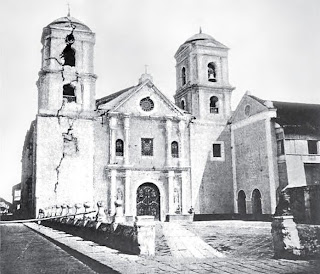
The British forces occupied the church 1762 during "Seven Years War". In 1854, it was renovated by architect Lucino Oliver and added two bell towers. It was hit by eartquake in 1880 that makes crack on the left bell tower and eventually it was removed same as it appears in the present. In 1898, the church serve as a place where the Spain prepared the terms of surrender of Manila to the United States following the Spanish-American War. In World War II, the church served as camp for prisoners and during the Battle of Manila, it is the only church inside Intramuros remain standing but the monastery adjascent to the church was totally destroyed. The monastery rebuilt in 1970s by architect Angel Nakpil.

Image Source
San Agustin Church at Present
San Agustin Church facadeImage via Wikipedia
San Agustin Church Facade
Image via Wkipedia
Damage on the left bell tower after 1880 earthquake
War damaged San Agustin Church and convent, In...Image by John T Pilot via Flickr
Damaged San Agustin Church during World War 2
Interior of San Agustin Church, Manila in Mani...Image via Wikipedia
Inside San Agustin Church
San Agustin ChurchImage via Wikipedia
Inside San Agustin Church

San Agustin Church, Intramuros, ManilaImage by ~MVI~ (has found pansit in Hyderabad) via Flickr
Inside San Agustin Church
Image Source
Near to Altar inside San Agustin Church
Image Source
Wedding in San Agustin Church
Image Source
San Agustin Church Hallway
San Agustin Church is a popular venue for wedd...Image via Wikipedia
Wedding Ceremony in San Agustin Church
Molave door of San Agustin ChurchImage via Wikipedia
The ornately carved main door of San Agustin Church


Enhanced by Zemanta

Saturday, July 16, 2011

Chocolate Hills in Bohol


The Chocolate Hills are the famous tourist attraction in Bohol Island, composed of 1,776 hills spread in an area of more than 50 square km in the towns of Carmen, Batuan and Sagbayan. The hills is a grass covered limestone and green in color during rainy season and turns to chocolate brown during dry season as the grass dry up, hence the name came from. The shape is generally cone or dome shaped with height varies from 30 to 50 m high with the highest of 120 m.

The Chocolate hills were the uplift of coral deposits, fractured by tectonic processes and the results of the action of rainwater, surface water, ground water and erosion and developed through hundreds of thousands of years. The chocolate hills are considered to be a remarkable example of karst topography.

Two hills were developed into resorts for tourism. The one is located in Carmen, Bohol located in Barangay Buenos Aires called "Chocolate Hills Complex" that is owned and operated by the government. The Chocolate Hills Complex  has a restaurant, hotel with swimming pool and observation deck located 64m above the ground with 360 degree view of the surrounding area for easy viewing of the chocolate hills. The other resort is the "Sagbayan Peak" located in Sagbayan town. Viewing is made from the deck of an elevated ridge that provides an unobsructed view of Chocolate Hills and the sea of Cebu City. Aside from viewing, Sagbayan Peak offers restaurant, children's park, hotel, swimming pool, driving range and butterfly dome.  Tarsier sanctuary and a 100 hectare golf course is also planned.

The Chocolate Hills are included in Philippine Tourism Authority's list of tourist destinations and declared as the country's 3rd National Geographic Monument and proposed for inclusion in UNESCO World Heritage List under the criteria of superlative natural phenomena or areas of exceptional natural beauty and aesthetic importance.


Chocolate Hills, Bohol Province, PhilippinesImage via Wikipedia
The Chocolate Hills in Bohol, Philippines cons...Image via Wikipedia
Chocolate Hills compose of 1,776 dome-shape limestone hills
Chocolate Hills of Bohol, PhilippinesImage via Wikipedia
View on the Chocolate Hills from the Chocolate...Image via Wikipedia
View from Chocolate Complex
Chocolate Hills in BoholImage via Wikipedia
Chocolate Hills covered with fogImage via Wikipedia
Foggy Chocolate Hills
View of the Chocolate Hills from Sagbayan PeakImage via Wikipedia
View of the Chocolate Hills from Sagbayan Peak
Tropischer Kegelkarst, Chocolate Hills auf der...Image via Wikipedia
Evenly formed hills turn a rich brown in the p...Image via Wikipedia
Evenly formed hills turns into color brown during summer
resembling powdery chocolate
Aerial view of the Chocolate Hills, Bohol, Phi...Image via Wikipedia
Aerial View of Chocolate Hills in Bohol
Sagbayan PeakImage via Wikipedia
Sagbayan Peak
Enhanced by Zemanta

Sunday, July 3, 2011

Rice Terraces of the Philippine Cordilleras

The Rice Terraces of Cordillera was built more than 2000 years ago by ancients people of Ifugao before the arrival of Spaniards. Five locations were included in the list of UNESCO World Heritage Site in 1995, the rice terraces in Bangaan, Batad, Mayaoyao, Hungduan, and Nagacadan. The Banaue Rice Terraces was not included in the list because of many modern structures built in the site that makes it low in score for criterion of UNESCO. The five clusters of rice terraces has pass the criterion because of preservation and blending of physical, socio-cultural, economic, religious, and political environment as a living heritage landscape.

There are some rice terraces in other parts of the world but the rice terraces in Cordillera stands out because of its steep slope (maximum of 70 degrees) and high altitude(up to 1500m). The making of this terraces shows a great knowledge of ancient Ifugao in civil engineering. It is proven with their good design and construction of earth or stone walls along the terraces and carefully carving the contour of the mountains for better irrigation from forest top. A complex system of small earth dams, sluices, channels and bamboo pipes are installed to make the whole area of rice terraces flooded.

In 2001, the Rice Terraces of Cordillera was included also in the List of World Heritage in Danger due to deforestation, climate change and globalization.


Image Source
Bangaan Rice Terraces
Image Source
Batad Rice Terraces
Image Source
Batad Rice Terraces
Image Source
Batad Rice Terraces
Image Source
by Harley Palangchao
Mayaoyao Rice Terraces
Image Source
Mayaoyao Rice Terraces Aerial View
Hungduan Rice Terraces
by Shubert Ciencia
Nagacadan Rice Terraces

Enhanced by Zemanta

Thursday, June 30, 2011

Puerto-Princesa Subterranean River National Park


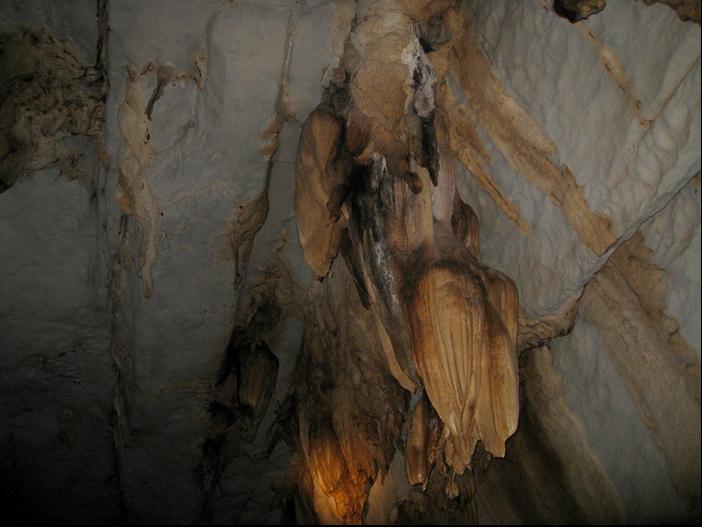
The Puerto Prinsesa Subterranean River National Park is one of the beautiful places to visit in Philippines. It is located in 50 kilometers north of Puerto Prinsesa, Palawan. The main feature of the park is the 2nd longest underground river named as Saint Paul Underground River which is 8.2km in length. Inside the caves, different formations of beautiful stalagmites and stalactites are present.

The area also represents a habitat for biodiversity conservation. The site contains a full mountain-to-the-sea ecosystem and has some of the most important forests in Asia. The researchers identified 800 plant species, 165 species of birds, 30 species of mammals and 19 species of reptiles.

In 1999, the park was considered in the list of UNESCO World Heritage Site. The underground river was also included in top 28 finalists in 8 wonders of the world.
Outside the underground river:


Inside the underground river:


Enhanced by Zemanta